Gingerbread Latte Cake

I may receive compensation in the form of payment or products to supplement my posts, but all opinions remain my own. Read our disclosure policy.
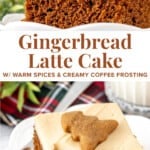
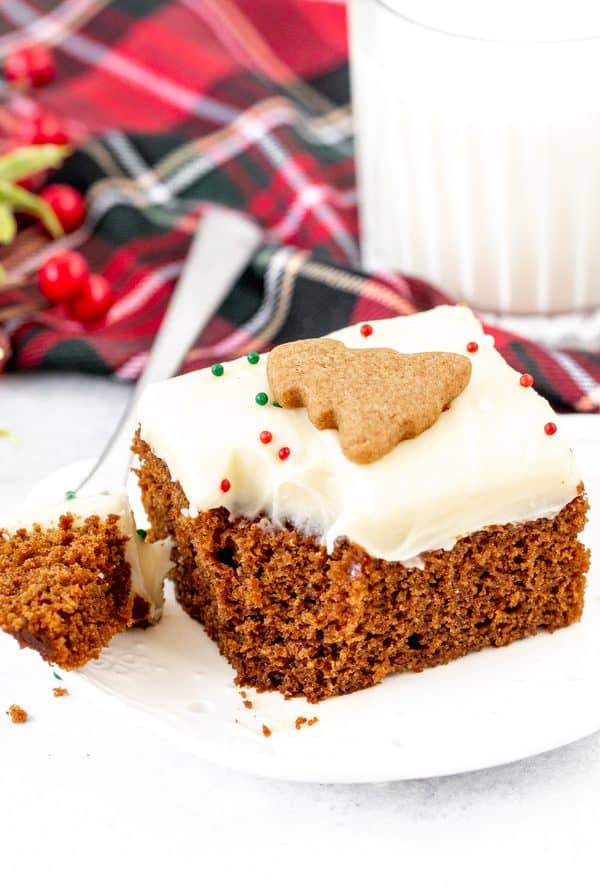
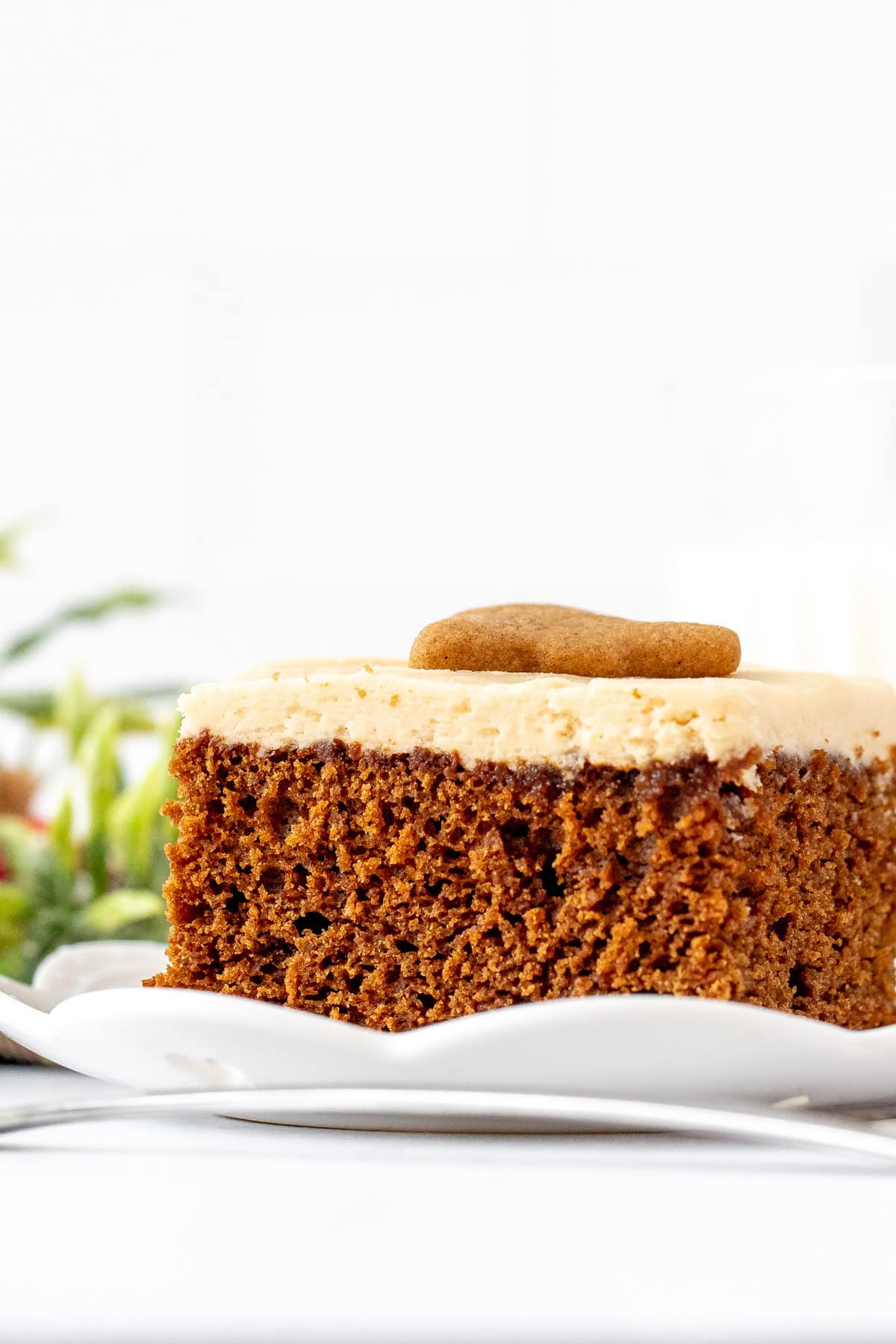
This easy gingerbread latte cake has all the flavor of your favorite holiday drink. It starts with a super moist gingerbread sheet cake that’s made with molasses and warm spices. The cake is soaked in a simple coffee syrup, then topped with the creamiest coffee frosting.
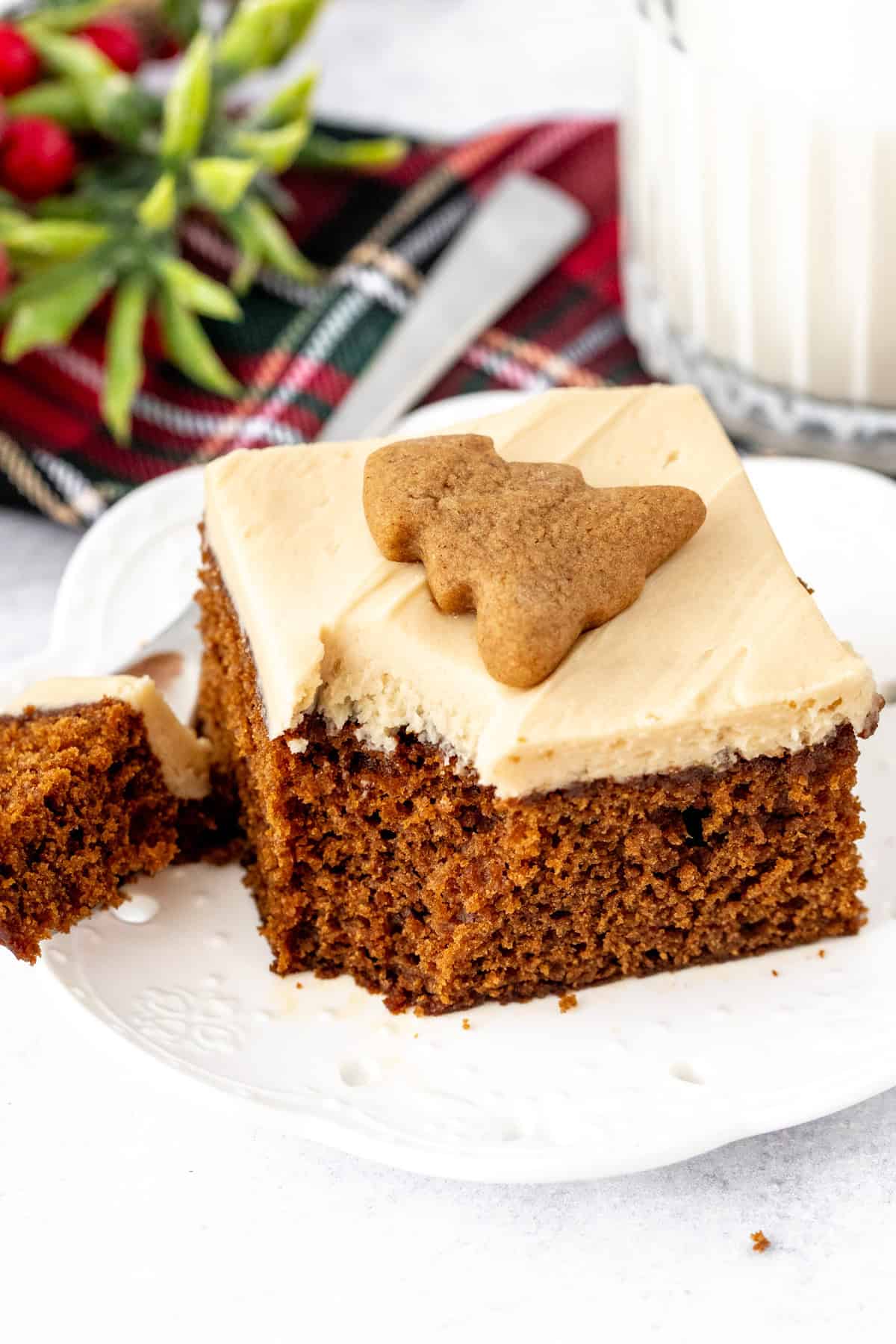
By far, my favorite specialty coffee is a gingerbread latte. The combo of warm spices, dark coffee, and rich cream make for such a delicious flavor – and this gingerbread latte cake has everything you love about the iconic drink. The gingerbread flavor is definitely prominent, and you’ll love the fluffy, creamy cafe latte frosting.
This recipe is made as a simple sheet cake in a 9×13 inch pan. The recipe starts with my classic gingerbread sheet cake. It’s incredibly moist and slightly springy in texture with the perfect combo of cozy spices and molasses. I slightly decreased the spices for this gingerbread latte cake, so that they wouldn’t overpower or compete with the coffee frosting. After the cake is baked, it’s infused with a coffee syrup soak. The soak infuses the cake with a hint of coffee and also makes the cake extra moist. Once fully cooled, it’s topped with the creamiest, fluffiest coffee frosting.
Recipe Rundown
You’ll start by making the gingerbread cake. It’s a simple, no fuss recipe – but does require a few necessary steps.
- Prep. Preheat the oven and prep your pan.
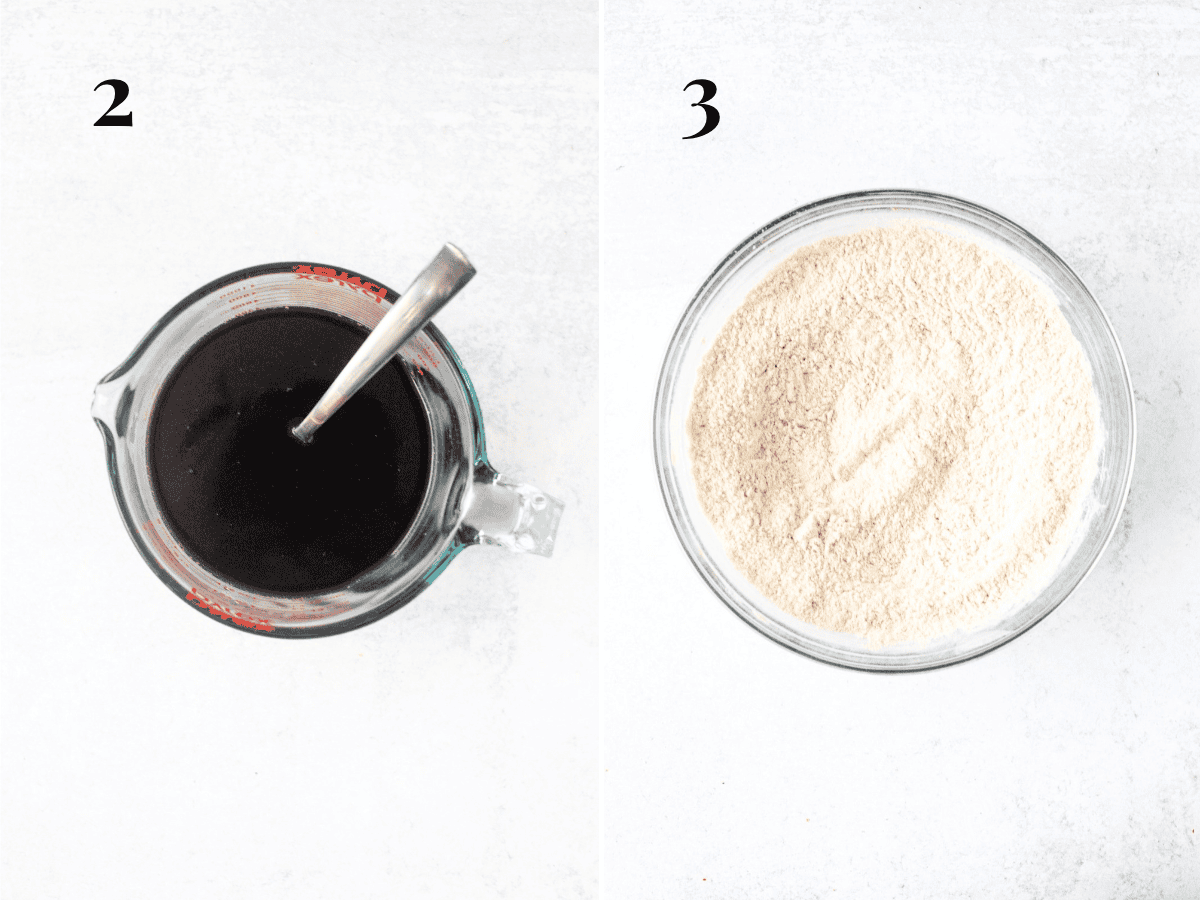
- Combine the Boiling Water and Molasses. This helps the molasses dissolve into the cake batter.
- Whisk the Dry Ingredients. This is done in a separate bowl.
- Cream the Butter, Brown Sugar and Oil. They should be fluffy and there should be no lumps.
- Beat in the Vanilla and Eggs into the Butter Mixture.
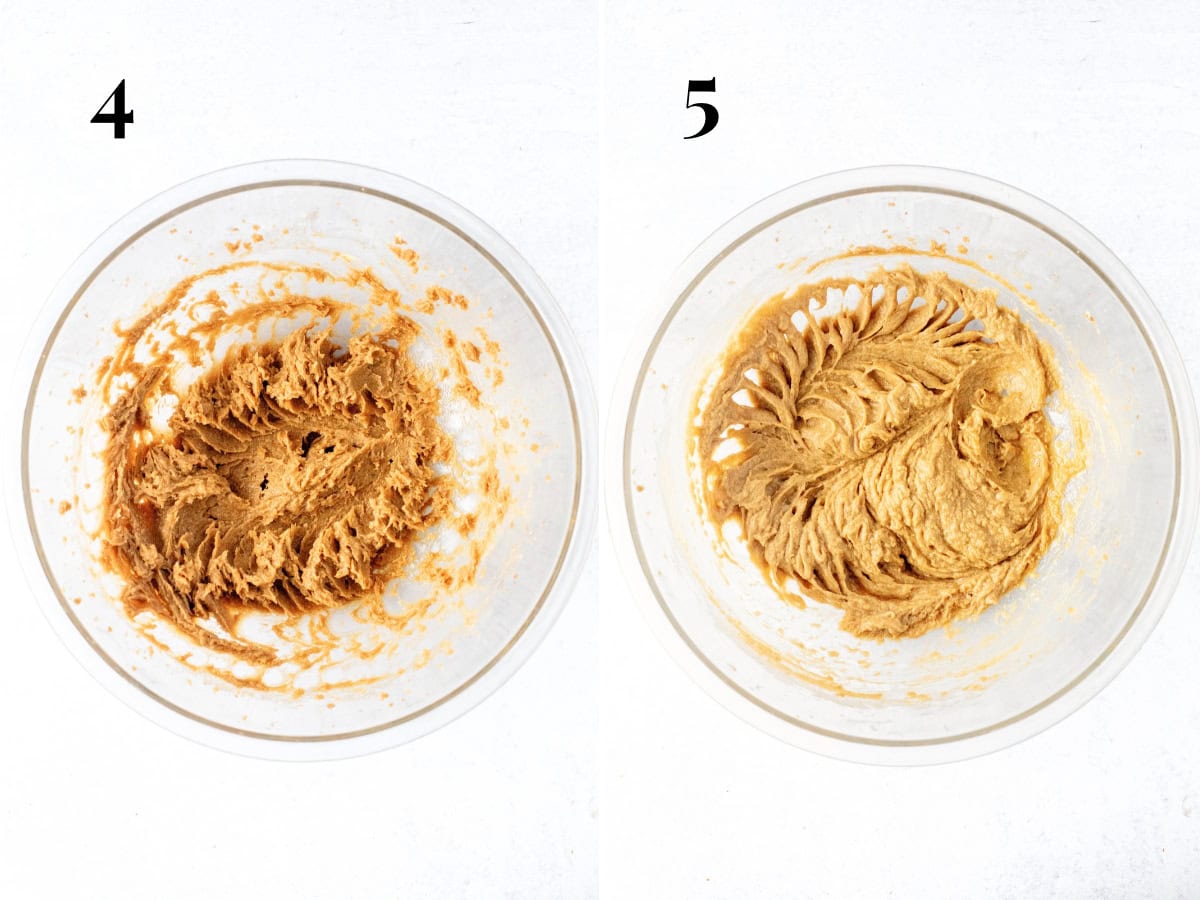
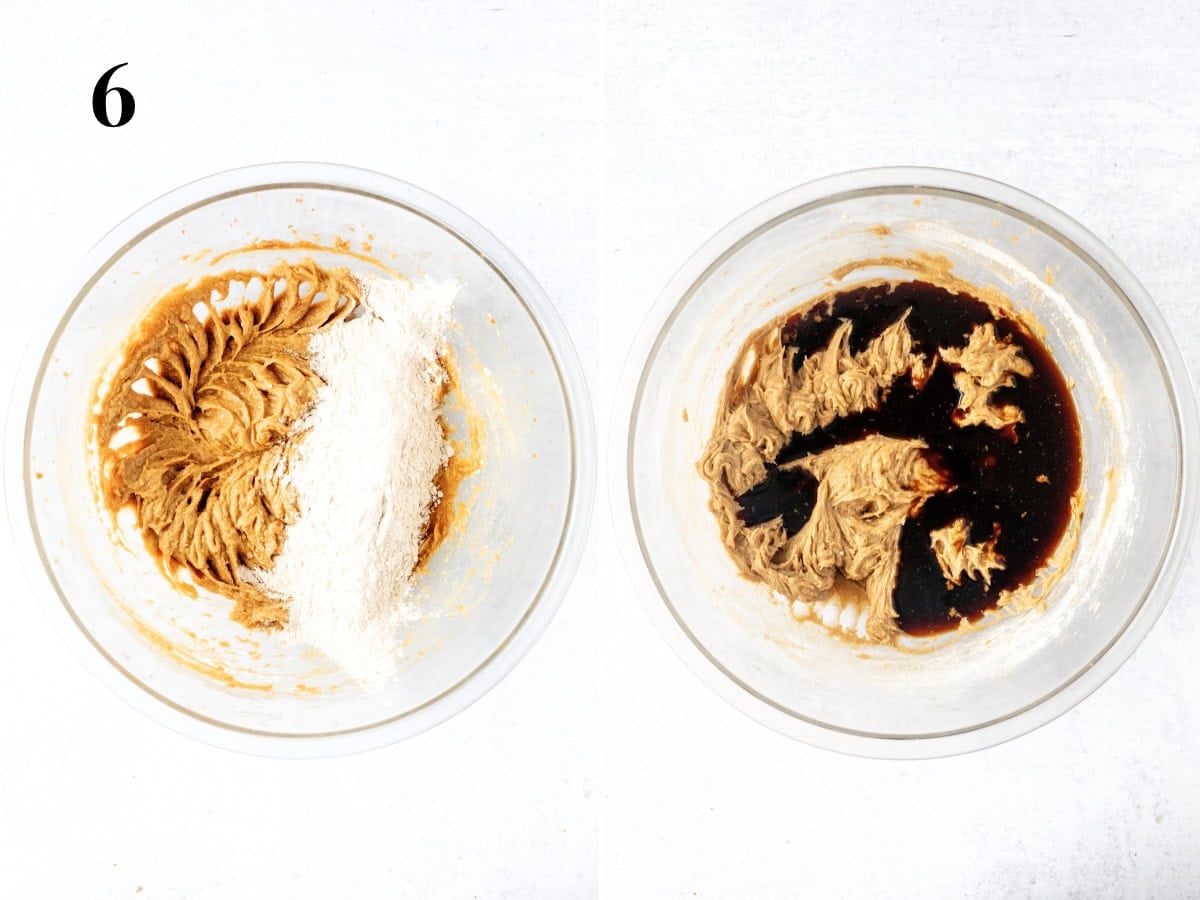
- Mix the Molasses Mixture and Dry Ingredients into the Butter Mixture. You’ll do this a little at a time, alternating between additions.
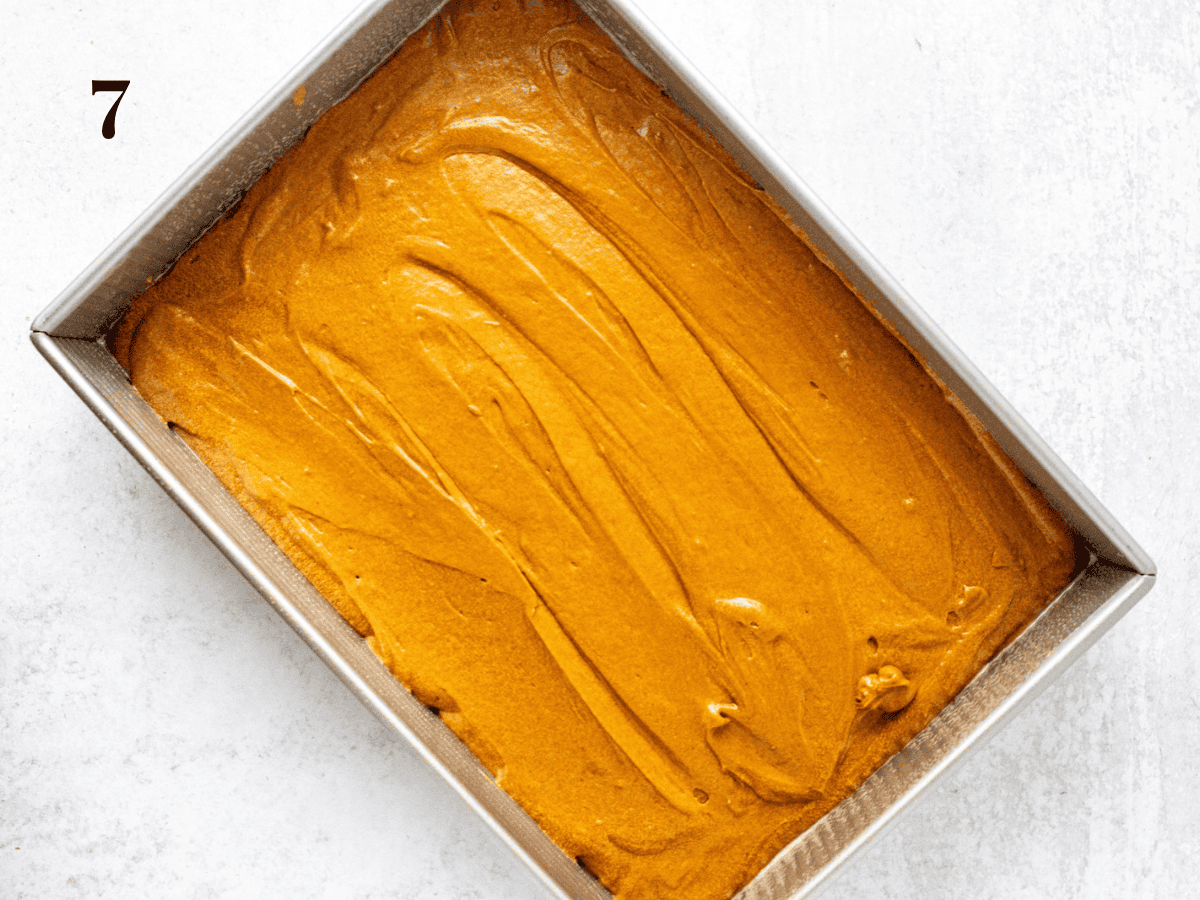
- Bake. Pour the batter into the pan and bake in the preheated oven.
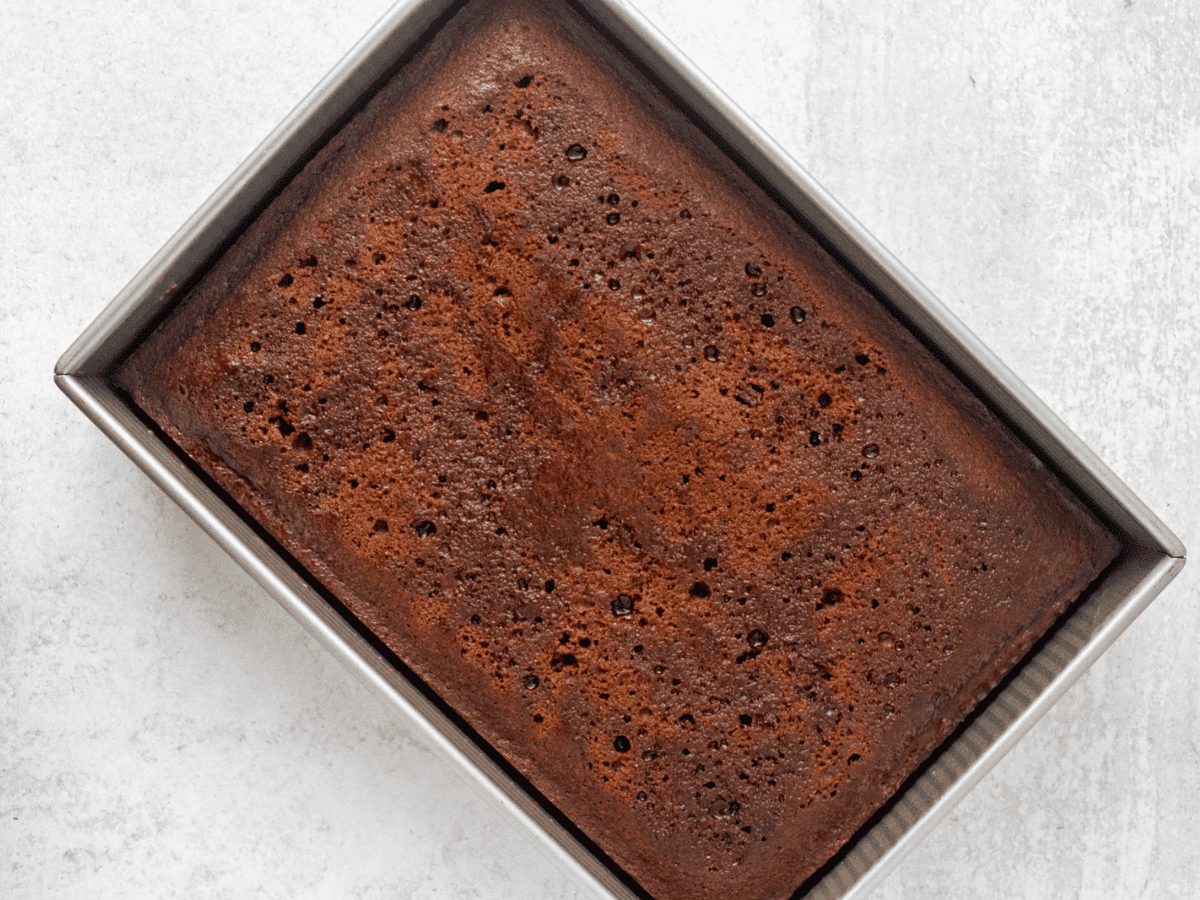
Then it’s time for the coffee soak. If you want a less prominent coffee flavor, you could skip this component – but I definitely recommend it.
- Boil Together the Ingredients. You’ll combine the espresso (or strong coffee), cream and sugar in a small saucepan. Once the sugar is fully dissolved, remove from the heat.
- Gently Saw Off the Top of the Cake & Poke Holes. This helps the coffee soak really absorb into the cake.
- Top. You’ll brush the coffee soak on top of the cake. The coffee soak/syrup should be warm when you do this to help it absorb into the cake.
Lastly, make the frosting.
- Beat the Butter. You want it to be smooth and creamy
- Mix in the Powdered Sugar, Vanilla & Salt. Be sure to sift the powdered sugar first so that there are no lumps.
- Combine the Cream & Instant Espresso Powder. Then Whip Into the Frosting. Whip for a good 2-4 minutes. This ensures that the instant espresso powder dissolves and makes the frosting extra thick and fluffy – just like the whipped cream on top of your latte.
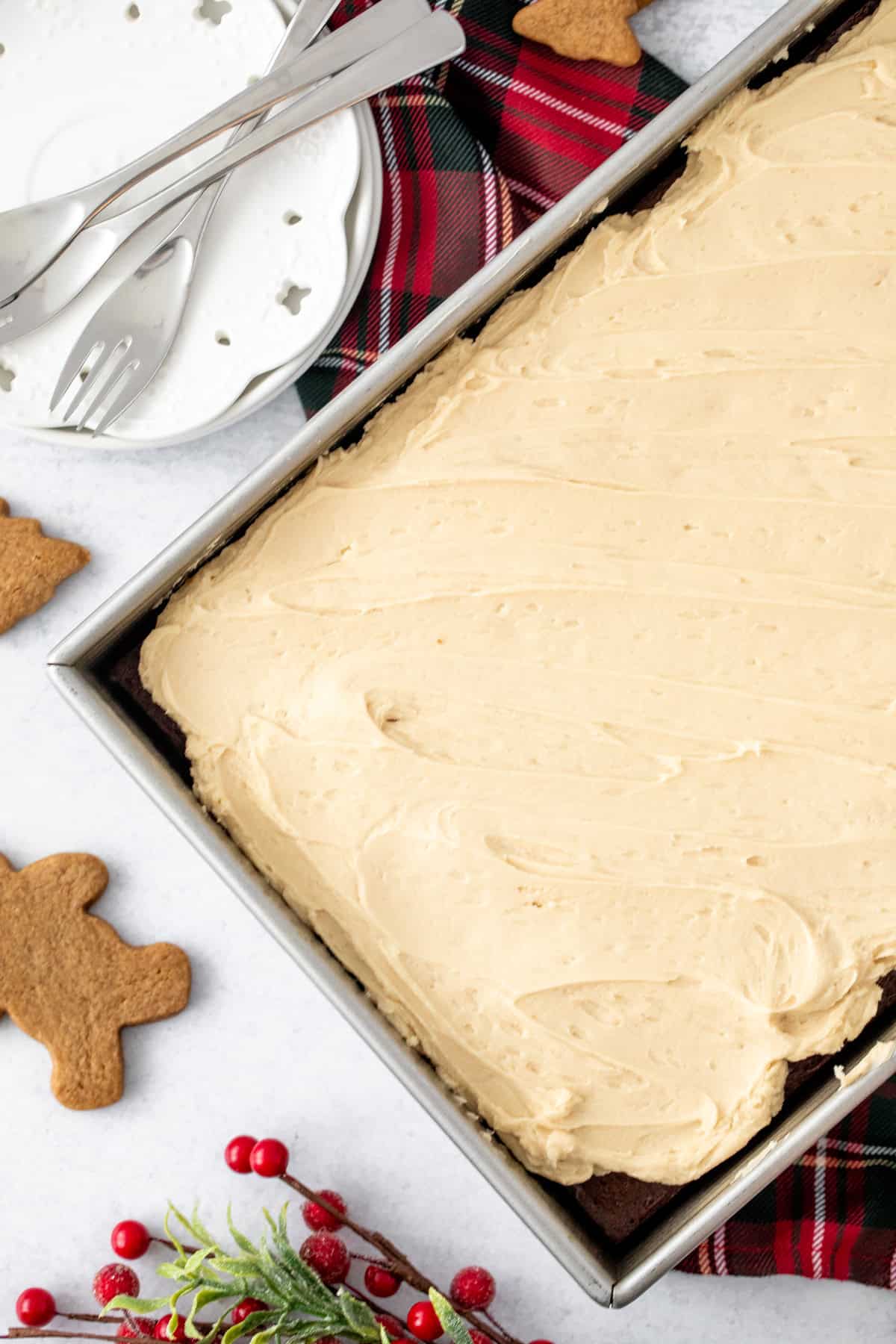
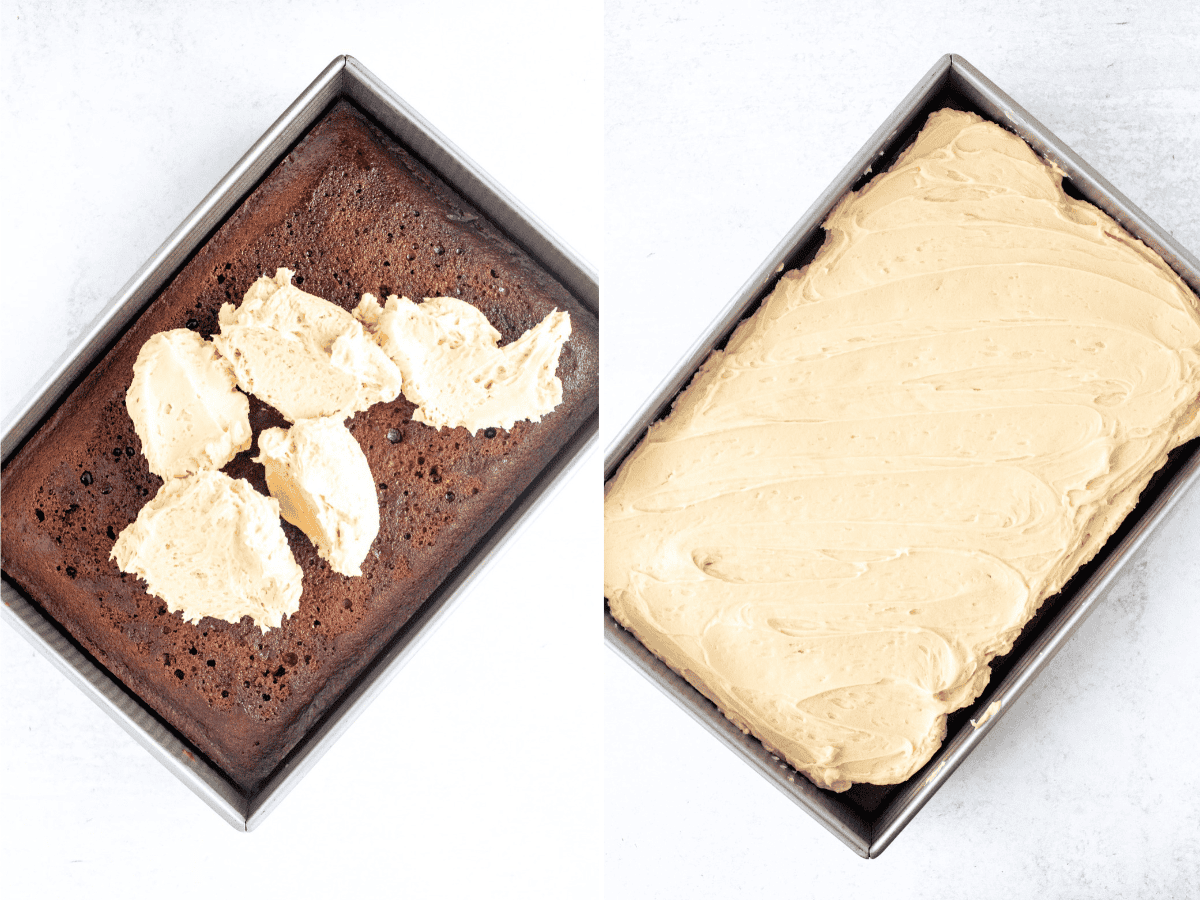
- Frost. I use the back of a large serving spoon to create large swirls of frosting.
Recipe Tip
Instant espresso powder works best for the frosting. It has very fine granules, and therefore dissolves easily into the frosting. If you can only find instant coffee powder – be sure to select one that has very fine granules, otherwise you’ll be left with granules in the frosting. Do not use regular coffee grounds in the frosting as they will not dissolve and won’t give the frosting a coffee flavor.
Make Ahead Tips
When it comes to holiday baking – make ahead tips are definitely important! This cake can be made 1 day before serving. Cool fully, then cover the pan and store at room temperature overnight. Make the frosting the day before you plan to serve. Transfer the frosting to an airtight container and store in the fridge overnight.
The day you plan to serve, take the frosting out of the fridge and let it sit on the counter for at least 30 minutes first to soften. Make the coffee soak and top the cake with the coffee soak. If the frosting is still firm, transfer to a bowl and beat with an electric mixer for 30-second intervals until smooth and creamy. Frost the cake and serve.
More Gingerbread Desserts to Try & Love
Gingerbread Latte Cake
Equipment
- 9×13 inch (23 x 33 cm) baking pan*
Ingredients
Gingerbread Latte Cake
- 1 cup fancy molasses (240 ml), do not use blackstrap molasses
- 1 cup boiling water
- 3¼ cups all-purpose flour (406 grams), measured properly – otherwise cake will be dry
- 2½ teaspoons ground ginger
- 2 teaspoons cinnamon
- ½ teaspoon ground nutmeg
- ¼ teaspoon ground cloves
- 1½ teaspoons baking soda
- ½ teaspoon salt
- ¾ cup unsalted butter (168 grams), softened to room temperature
- 1 cup brown sugar (210 grams), I used dark
- 2 tablespoons vegetable oil (30 ml), or canola oil
- 2 teaspoons vanilla extract
- 3 large eggs, room temperature
Coffee Soak
- ¼ cup strong coffee (60 ml)
- 2 tablespoons brown sugar
- 2 tablespoons whipping cream
Coffee Frosting
- 1 cup unsalted butter (226 grams), softened but still slightly firm to the touch
- 3-4 cups powdered sugar (330-440 grams), sifted
- ¼ teaspoon salt
- 1 teaspoon vanilla extract
- 2-3 teaspoons instant espresso powder
- 3-5 tablespoons half and half cream (45-75 ml), or milk
Instructions
Gingerbread Cake
- Preheat the oven to 350℉ (180℃) and lightly grease a metal 9×13 inch cake pan.
- In a large liquid measuring cup or medium bowl, carefully whisk together the molasses and boiling water. Set aside.
- In a separate medium bowl, sift together the flour, spices, baking soda and salt. Whisk together until the spices are evenly combined. Set aside.
- In a large bowl, beat together the butter, brown sugar and oil until creamy. There should be no lumps of butter or brown sugar. Turn off the mixer and scrape down the bottom and sides of the bowl.
- Add the vanilla into the butter mixture, then mix in the eggs 1 at a time. Turn off the mixer and scrape down the sides and bottom of the bowl after each addition. The mixture should be lighter and fluffier after the eggs are added.
- Mix the dry ingredients and molasses mixture into the butter mixture. Start by mixing in ⅓ of the dry ingredients, then mix in ½ of the molasses and water. Turn off the mixer and scrape down the bowl. Then mix in another ⅓ of the dry ingredients, followed by the remaining ½ of the molasses and water. Turn off the mixer and scrape down the bowl. Lastly, mix in the final ⅓ of the dry ingredients. Stop mixing as soon as everything is combined.
- Pour/spoon the batter into the prepared pan and bake in the middle of the preheated oven. The cake should take about 35-40 minutes to bake, or until an inserted toothpick comes out clean or with a few damp crumbs and the cake is starting to pull away at the sides of the pan.
- Cool the cake in the pan.
Coffee Soak
- Add all the ingredients to a small saucepan over low heat. Gently stir as the sugar melts. Remove from the heat.
- Gently saw off the very top of the cake – this is to help the coffee syrup really soak into the cake. Optionally, use a toothpick or wooden skewer to poke holes in the cake – this will really help the syrup soak into the cake
- Using a pastry brush or small spoon – brush/drizzle the coffee soak onto the cake.
Coffee Frosting
- In a large bowl using an stand or hand-held electric mixer, beat the butter until smooth and creamy.
- Add in 3 cups powdered sugar, along with with salt. Beat together, starting with the mixer on a low speed and gradually increasing to medium speed until the powdered sugar is combined.
- In a small bowl or liquid measuring cup, combine the instant coffee espresso powder and 5 tablespoons of half and half. Stir together to help dissolve the instant espresso (it may not be entirely dissolved at this stage.
- Beat the cream into the butter mixture, about 1 tablespoon at a time until the desired thickness is reached. If you need the frosting to be a little sweeter or thicker, then mix in a little more powdered sugar.
- Frost the fully cooled cake using an offset spatula or the back of a spoon.
Notes
- Molasses: Do not use blackstrap molasses – it is too bitter for baking.
- Instant Espresso Powder: If you do not have instant espresso powder, instant coffee powder will work. Be sure to choose a brand that has very fine coffee granules – this makes it easier to dissolve.
- Nutrition: Details provided are an estimate only, based on 1 slice of cake, assuming that all the coffee frosting and coffee soak are used.
- Storage: Fresh cake is always best. Store leftovers in an airtight container at room temperature for up to 2 days, or in the fridge for up to 4 days.